ECU Remapping Explained: How Engine Calibration Improves Performance and Efficiency
Modern vehicles rely on electronic control units to manage engine operation, fuel injection, ignition timing, turbocharger pressure, torque delivery and emissions control. These systems use sophisticated software and calibration data to ensure that the engine operates according to its designed requirements.
ECU remapping is the process of modifying selected engine calibration parameters within a compatible electronic control unit to change how the engine operates.
Professional ECU tuning specialists analyze the original software, understand the engine's operating characteristics and make carefully evaluated calibration adjustments. Depending on the vehicle and engine configuration, these changes may influence throttle response, torque delivery, power output and other performance characteristics.
However, ECU remapping involves much more than changing a few numerical values. It requires knowledge of engine management, electronic control systems, sensor information, fuel delivery, ignition control, thermal limits and software integrity.
This guide explains how ECU remapping works, which calibration maps are commonly involved, how ECU programming equipment is used and what technicians should consider before modifying engine software.
1. What Is ECU Remapping?
ECU remapping refers to modifying selected calibration data stored within an engine control unit.
The ECU uses software instructions and calibration parameters to determine how the engine should respond under different operating conditions.
These parameters may influence fuel injection, ignition timing, boost pressure, torque limitations and other engine management functions.
By modifying compatible calibration areas, a specialist can change selected engine operating characteristics while retaining the underlying ECU control architecture.
Why Do Vehicles Have ECU Calibration Maps?
Automotive manufacturers develop engine calibrations to meet multiple requirements, including:
- Engine performance.
- Fuel consumption.
- Emissions regulations.
- Engine durability.
- Transmission compatibility.
- Driving comfort.
- Environmental operating conditions.
- Vehicle market requirements.
Manufacturers must balance these requirements across different driving conditions and operating environments.
Professional ECU remapping focuses on modifying selected calibration parameters while maintaining appropriate operating margins and vehicle reliability.
2. How Does an Automotive ECU Control an Engine?
Before understanding ECU remapping, it is important to understand how an engine control unit operates.
The ECU receives information from multiple sensors, processes the information through its internal software and sends commands to different engine actuators.
Common Engine Sensors
- Mass Air Flow sensor.
- Manifold Absolute Pressure sensor.
- Crankshaft Position sensor.
- Camshaft Position sensor.
- Engine Coolant Temperature sensor.
- Intake Air Temperature sensor.
- Throttle Position sensor.
- Accelerator Pedal Position sensor.
- Oxygen or Lambda sensor.
- Fuel Rail Pressure sensor.
Common Engine Actuators
- Fuel injectors.
- Ignition coils.
- Electronic throttle body.
- Turbocharger control valves.
- Fuel pressure control valves.
- Exhaust Gas Recirculation valves.
- Variable valve timing actuators.
Basic ECU Control Process
       Engine Sensors
             |
             v
       Sensor Signals
             |
             v
       Engine ECU
             |
      Software and
    Calibration Maps
             |
             v
     Control Decisions
             |
             v
       Engine Actuators
             |
             v
      Engine Operation
The ECU continuously evaluates operating conditions and adjusts engine control commands accordingly.
Calibration data determines how the software responds to different combinations of sensor inputs and operating conditions.
3. What Are ECU Calibration Maps?
Calibration maps are structured data tables used by ECU software to determine how particular engine parameters should be controlled.
These maps may contain values organized according to engine speed, calculated load, temperature, pressure or other operating variables.
Depending on the ECU architecture, calibration data may include one-dimensional tables, two-dimensional maps and more complex multidimensional structures.
Common ECU Calibration Maps
- Fuel injection quantity maps.
- Injection timing maps.
- Ignition timing maps.
- Boost pressure target maps.
- Torque limitation maps.
- Throttle response maps.
- Air-fuel ratio target maps.
- Rail pressure target maps.
- Temperature compensation maps.
- Engine protection maps.
How Does a Calibration Map Work?
Consider an engine operating at a particular speed and load.
The ECU identifies the relevant operating conditions and uses its calibration data to determine the appropriate control values.
For example, a fuel injection map may contain different injection quantities for different engine speeds and load conditions.
When calibration data is modified, the ECU may command different operating behavior under the same conditions.
4. ECU Remapping and Fuel Injection Calibration
Fuel injection calibration is one of the most important areas of engine tuning.
The fuel system must deliver an appropriate amount of fuel under different operating conditions.
The required fuel quantity depends on engine design, air mass, engine speed, load, temperature and other control variables.
Common Fuel Injection Parameters
- Injection quantity.
- Injection duration.
- Injection timing.
- Fuel pressure targets.
- Injection sequence.
- Fuel correction values.
Gasoline Engine Fuel Calibration
Gasoline engines generally require appropriate air-fuel mixture control across different operating conditions.
The ECU may use information from airflow sensors, pressure sensors, temperature sensors and oxygen sensors to calculate fuel delivery.
Calibration adjustments must account for combustion stability, knock limits, exhaust temperature and emissions requirements.
Diesel Engine Fuel Calibration
Diesel engines use different combustion and fuel injection strategies compared with gasoline engines.
Important parameters may include:
- Injected fuel quantity.
- Injection timing.
- Rail pressure targets.
- Pilot injection strategy.
- Main injection strategy.
- Post-injection strategy.
- Torque-based fuel limitation.
Diesel calibration must also consider combustion pressure, exhaust temperature, smoke formation and emissions system requirements.
5. Ignition Timing and ECU Calibration
Ignition timing is an important calibration parameter in spark-ignition gasoline engines.
It determines when the spark plug produces an ignition event relative to the engine's crankshaft position.
Ignition timing influences combustion behavior, engine torque, fuel consumption and knock resistance.
What Is Ignition Advance?
Ignition advance refers to initiating the spark before the piston reaches top dead center during the compression stroke.
The appropriate ignition timing depends on several variables, including:
- Engine speed.
- Engine load.
- Intake air temperature.
- Coolant temperature.
- Fuel characteristics.
- Combustion chamber design.
- Knock sensor feedback.
Why Is Ignition Timing Important?
Incorrect ignition timing can affect engine performance and reliability.
Excessive advance under unsuitable conditions may increase the risk of engine knock, while inappropriate retard can reduce efficiency and increase exhaust temperatures.
Professional calibration requires evaluating ignition behavior across the relevant operating range rather than focusing on a single engine speed or load point.
Diesel engines do not use spark-plug ignition timing. Their combustion timing is controlled through fuel injection strategies and other engine management parameters.
6. Turbocharger Boost Pressure Calibration
Turbocharged engines use exhaust energy to drive a turbine connected to a compressor.
The compressor increases the amount of air entering the engine, allowing the engine to operate with greater air mass under suitable conditions.
The ECU manages turbocharger operation through different control strategies.
Common Turbocharger Control Parameters
- Boost pressure target.
- Turbocharger actuator position.
- Wastegate control.
- Variable Geometry Turbocharger control.
- Intake air temperature compensation.
- Engine load limitations.
- Overboost protection.
What Is a Boost Pressure Map?
A boost pressure map contains target pressure information used by the ECU under different engine operating conditions.
The ECU compares the target value with measured pressure information and adjusts turbocharger control accordingly.
What Should Be Considered During Boost Calibration?
Increasing boost pressure does not automatically produce a reliable performance improvement.
Professional calibration must consider:
- Turbocharger operating limits.
- Compressor efficiency.
- Exhaust gas temperature.
- Intake air temperature.
- Fuel delivery capacity.
- Engine mechanical limitations.
- Intercooler performance.
- Transmission torque capacity.
Excessive boost pressure can increase mechanical and thermal stress and may shorten the service life of engine components.
7. Torque Management and Torque Limiters
Modern vehicles use torque-based engine management systems to coordinate engine output with transmission and vehicle control systems.
The ECU calculates requested torque and determines how much torque the engine can deliver under the current operating conditions.
What Is a Torque Limiter?
A torque limiter is a calibration function that restricts the maximum permitted engine torque under specified conditions.
Torque limitations may depend on:
- Engine speed.
- Engine temperature.
- Gear selection.
- Transmission operating conditions.
- Clutch protection requirements.
- Traction control requests.
- Engine protection strategies.
Why Is Torque Management Important?
Engine torque directly influences the load experienced by the transmission, clutch, drivetrain and other mechanical components.
Professional calibration must consider the complete powertrain rather than modifying engine output independently.
For example, increasing engine torque beyond the transmission's permitted operating range may cause excessive clutch loading, increased transmission temperature or premature component wear.
8. Understanding Air-Fuel Ratio and Lambda Control
Air-fuel ratio describes the relationship between the mass of air and fuel supplied for combustion.
Lambda is a normalized measurement comparing the actual air-fuel ratio with the stoichiometric air-fuel ratio for the particular fuel.
What Does Lambda Mean?
- Lambda = 1: Stoichiometric mixture.
- Lambda below 1: Rich mixture.
- Lambda above 1: Lean mixture.
The actual stoichiometric air-fuel ratio depends on the fuel composition.
Why Is Lambda Important?
Lambda information helps the ECU manage combustion and emissions control.
Different operating conditions may require different mixture control strategies.
What Is Closed-Loop Fuel Control?
In closed-loop operation, the ECU uses feedback from suitable oxygen or air-fuel ratio sensors to evaluate combustion mixture conditions.
The ECU can then make corrections based on measured feedback.
What Is Open-Loop Fuel Control?
In open-loop operation, the ECU uses calculated values and predefined calibration strategies without relying on the same closed-loop feedback correction.
The specific conditions that trigger open-loop operation vary between engine designs and operating strategies.
9. ECU Remapping for Naturally Aspirated and Turbocharged Engines
Engine configuration has a major influence on the potential results of ECU calibration.
Naturally aspirated and turbocharged engines operate differently and have different tuning considerations.
Naturally Aspirated Engines
Naturally aspirated engines draw air into the cylinders without using an exhaust-driven turbocharger or mechanically driven supercharger.
ECU calibration may focus on:
- Fuel injection control.
- Ignition timing.
- Throttle response.
- Variable valve timing strategies.
- Torque management.
Because air intake is not increased through forced induction, the available performance changes from software calibration alone may be limited by engine design.
Turbocharged Engines
Turbocharged engines provide additional calibration opportunities because the ECU manages boost pressure and related air management functions.
Potential calibration areas include:
- Boost pressure targets.
- Torque management.
- Fuel delivery.
- Ignition timing for gasoline engines.
- Injection timing for diesel engines.
- Thermal protection.
Turbocharged engines also require careful evaluation of turbocharger limits, exhaust temperature, fuel system capacity and mechanical reliability.
10. What Is Stage 1, Stage 2 and Stage 3 ECU Tuning?
ECU tuning is sometimes described using stage-based terminology.
These labels are widely used in the automotive aftermarket, but they are not universal technical standards.
Different tuning companies may use different definitions.
Stage 1 Tuning
Stage 1 commonly refers to ECU calibration changes made to an otherwise largely standard engine configuration.
Depending on the application, the calibration may focus on:
- Torque delivery.
- Throttle response.
- Fuel calibration.
- Ignition timing.
- Boost control where applicable.
Even when the hardware remains standard, the engine must be mechanically healthy and the calibration must remain within appropriate operating limits.
Stage 2 Tuning
Stage 2 is commonly associated with additional hardware modifications and a calibration designed around those changes.
Depending on the engine and tuning package, modifications may involve intake, intercooling, exhaust or other compatible components.
Hardware compatibility, emissions compliance and thermal performance must be evaluated.
Stage 3 Tuning
Stage 3 is generally used to describe more extensive engine modifications.
It may involve significant changes to turbocharging systems, fuel delivery, engine internals and supporting hardware.
Such applications require detailed engineering, mechanical validation and extensive calibration testing.
Stage Comparison
| Category | General Description | Main Consideration |
|---|---|---|
| Stage 1 | Software-focused calibration | Standard hardware condition and operating limits |
| Stage 2 | Software and supporting hardware modifications | Hardware compatibility and thermal management |
| Stage 3 | Extensive engine and hardware modifications | Mechanical engineering and comprehensive validation |
Stage labels should never replace an actual technical assessment of the vehicle and its components.
11. What Is the Difference Between ECU Remapping and Chiptuning?
ECU remapping and chiptuning are terms frequently used to describe modifications to engine control software.
Historically, chiptuning often involved modifying data stored in programmable memory chips inside an ECU.
Modern ECU tuning generally involves retrieving and modifying compatible software or calibration data through supported programming interfaces.
Traditional Chiptuning
Older electronic control units sometimes used removable programmable memory chips.
Technicians could remove the chip, read its contents using specialized equipment and program modified data into a compatible replacement or original component.
Modern ECU Remapping
Modern systems often allow supported memory operations through diagnostic, Bench or Boot programming interfaces.
Depending on the ECU architecture, the original software can be read, analyzed and programmed using compatible equipment.
Comparison
| Feature | Traditional Chiptuning | Modern ECU Remapping |
|---|---|---|
| Memory Access | Often physical chip access | Often electronic programming interfaces |
| Technology | Older programmable memory devices | Modern microcontrollers and Flash memory |
| Programming Method | Chip removal or external programming | OBD, Bench, Boot or other supported methods |
| Application | Older electronic control systems | Modern electronic control systems |
12. How ECU Remapping Works: The General Process
Professional ECU remapping requires a structured process involving vehicle identification, original data retrieval, calibration analysis, software modification and verification.
Step 1: Identify the Vehicle and ECU
The technician records the vehicle manufacturer, model, production year, engine configuration and ECU identification.
Important ECU information may include:
- ECU manufacturer.
- Hardware number.
- Software identification.
- Calibration identification.
- Microcontroller family.
Step 2: Perform Initial Diagnostics
Before modifying software, the technician should check the engine's mechanical and electronic condition.
This may include reading diagnostic trouble codes, checking live data and evaluating relevant engine systems.
An existing mechanical or electrical fault should be investigated before calibration work begins.
Step 3: Read the Original ECU Data
A compatible ECU programmer retrieves the supported software or memory data.
The reading method may use OBD, Bench, Boot or another supported access procedure.
Step 4: Save the Original File
The original data should be preserved before any modification is performed.
Technicians should maintain clear records of ECU identification and software versions.
Step 5: Analyze Calibration Data
Compatible ECU editing software may be used to identify and analyze calibration maps.
The specialist evaluates relevant parameters and their relationships with engine operation.
Step 6: Modify Selected Calibration Parameters
Calibration changes are developed according to the engine configuration, hardware condition and intended application.
Changes must account for the interaction between different engine management systems.
Step 7: Verify File Integrity
Before programming, the modified file should be checked using the appropriate software integrity procedures.
Step 8: Write the Modified Data
The compatible programming equipment transfers the verified data to the ECU through a supported programming procedure.
Step 9: Perform Post-Programming Diagnostics
After programming, the technician checks ECU communication, identification information and relevant diagnostic functions.
Step 10: Validate Engine Operation
Where appropriate, vehicle testing, data logging and dynamometer measurements can be used to evaluate the results.
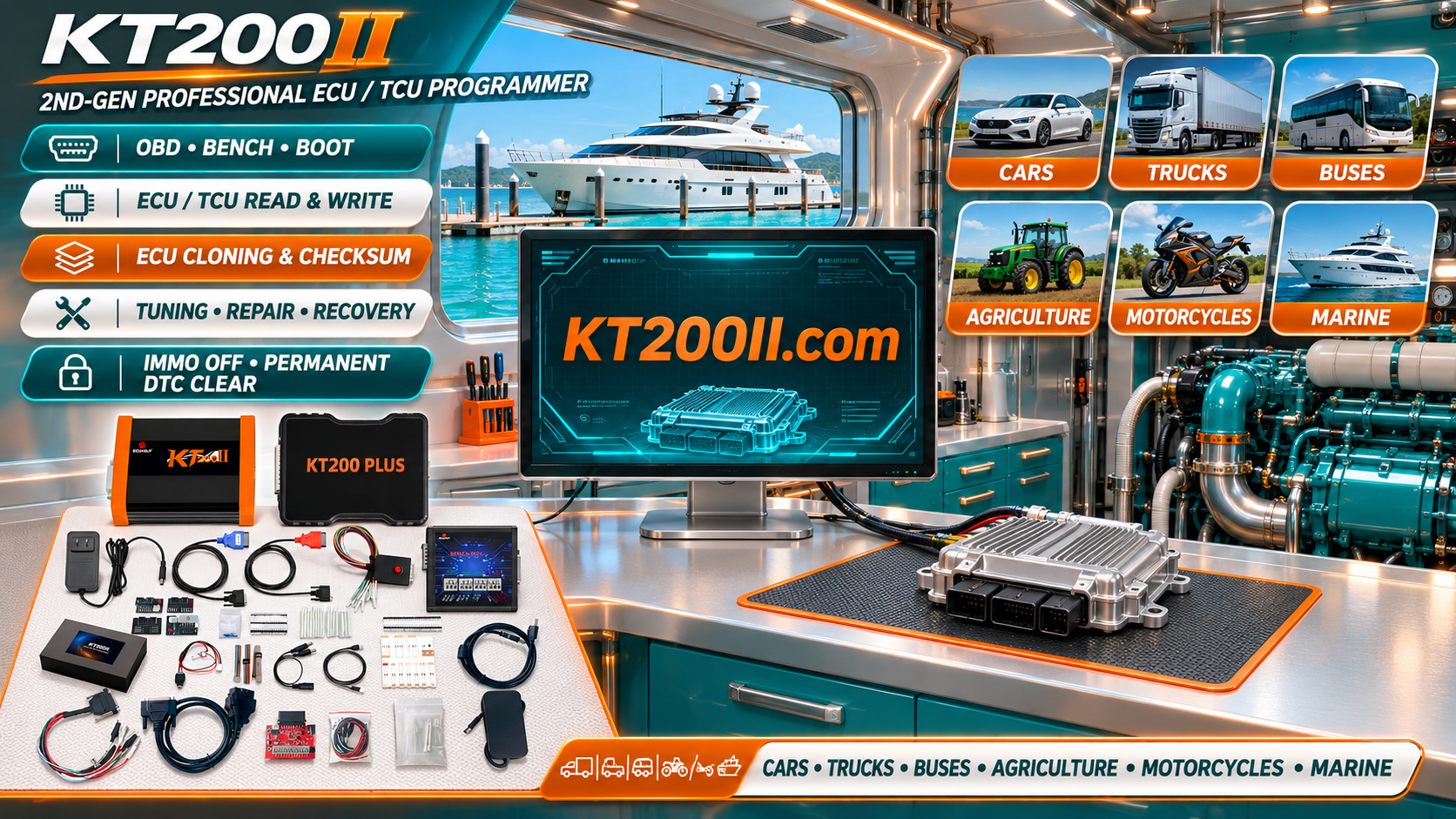
13. What Equipment Is Required for Professional ECU Remapping?
Professional ECU remapping requires more than editing software.
Technicians need compatible programming hardware, suitable software, reliable electrical conditions and appropriate diagnostic equipment.
ECU Programmer
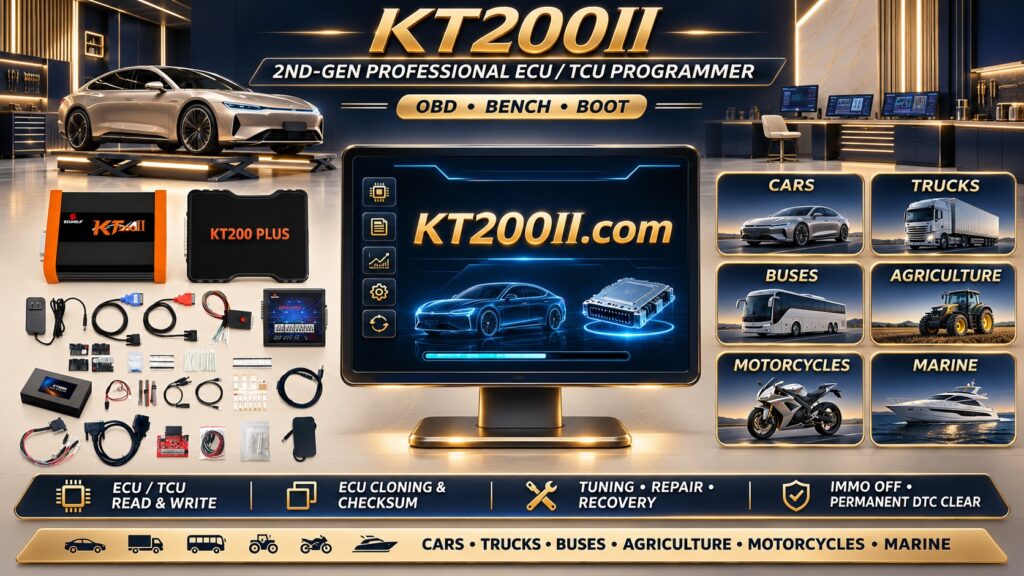
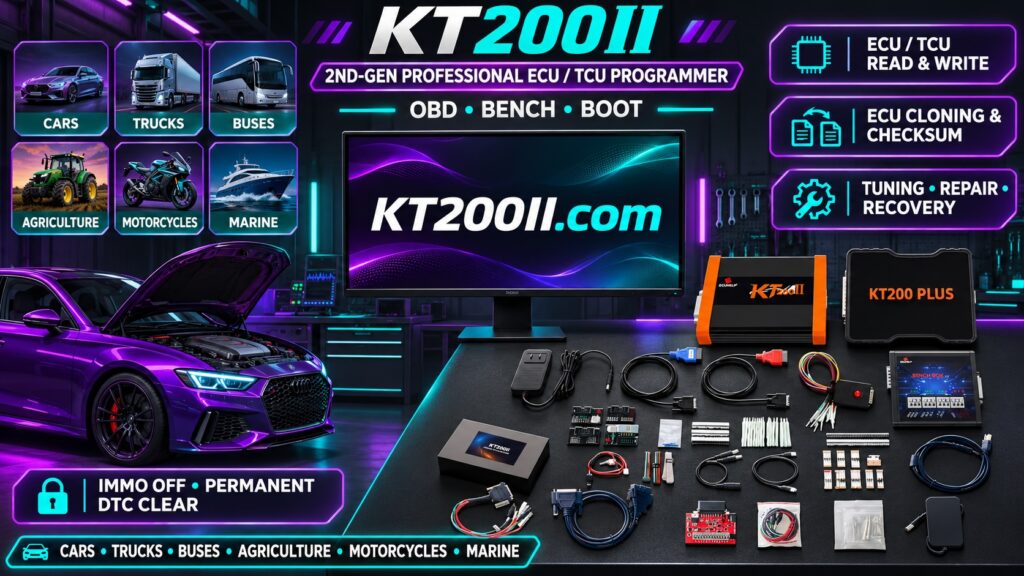
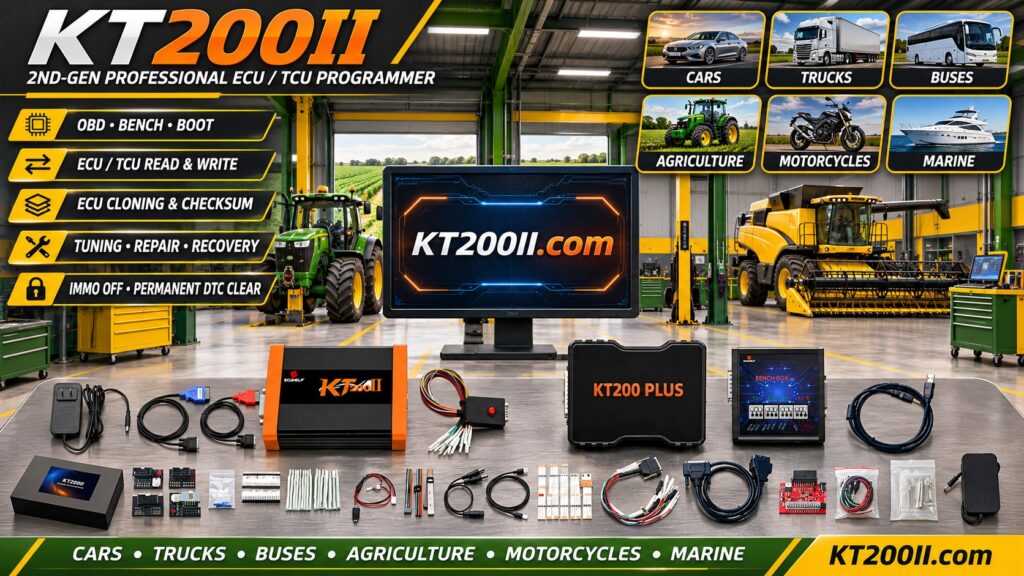
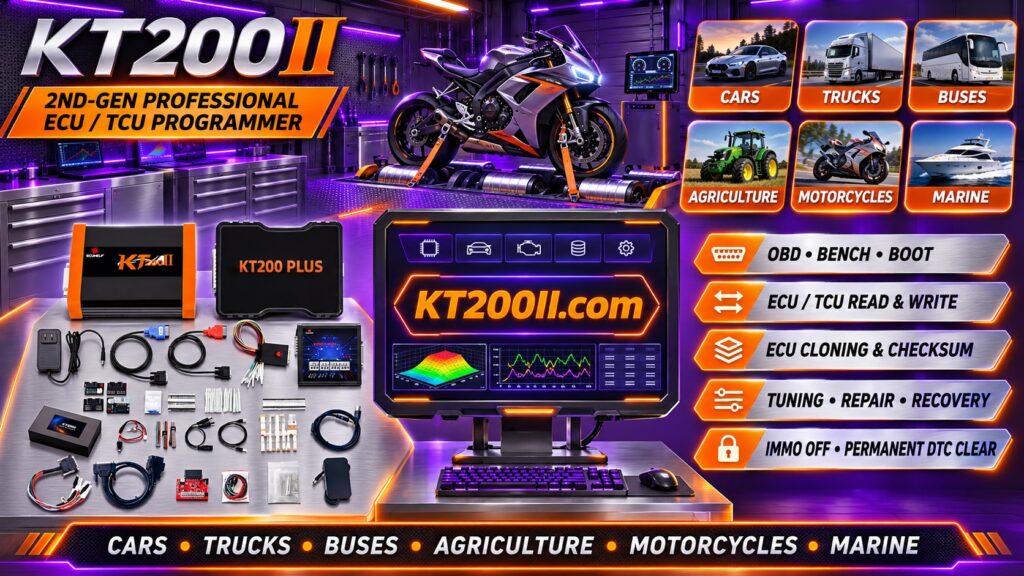
An ECU programmer provides supported communication and memory operations for compatible control units.
Depending on the equipment, it may support:
- ECU identification.
- ECU data reading.
- ECU data writing.
- OBD programming.
- Bench programming.
- Boot programming.
- Selected Flash and EEPROM operations.
ECU Editing Software
ECU editing applications help specialists analyze compatible binary files and identify calibration structures.
Some applications provide map visualization, parameter comparison and calibration editing functions.
Diagnostic Equipment
Diagnostic tools help technicians evaluate vehicle condition before and after programming.
Oscilloscope and Multimeter
These instruments are useful for electrical diagnosis and troubleshooting when sensor or actuator signals require investigation.
Dynamometer
A dynamometer can measure engine or vehicle performance under controlled test conditions, depending on its design and application.
Recommended Equipment Categories
| Equipment | Purpose |
|---|---|
| ECU Programmer | Read and write supported ECU data |
| ECU Editing Software | Analyze and modify compatible calibration files |
| Diagnostic Scanner | Read DTCs and monitor live data |
| Regulated Power Supply | Maintain stable electrical conditions |
| Multimeter | Perform electrical measurements |
| Oscilloscope | Analyze electrical signals |
| Dynamometer | Measure performance under controlled conditions |
14. Understanding ECU File Formats
ECU programming equipment may generate different types of files depending on the control unit and software application.
These files may contain raw memory data, selected memory regions or application-specific information.
Common File Types
- BIN files.
- HEX files.
- Application-specific ECU files.
- Calibration data files.
- Memory backup files.
BIN Files
A BIN file commonly contains binary data retrieved from a memory device or generated by a programming application.
It may represent Flash data, EEPROM data or another supported memory region.
HEX Files
Intel HEX is a text-based file format used to represent binary data together with address information.
It is commonly encountered in embedded software development and certain programming workflows.
Why Is File Identification Important?
Different files may contain different memory regions or address arrangements.
Before modifying or programming a file, technicians should confirm:
- File origin.
- ECU hardware compatibility.
- Software identification.
- Memory region.
- File size.
- Address organization.
- Integrity information.
A file extension alone does not prove that the file is suitable for a particular ECU.
15. What Is Checksum Correction in ECU Remapping?
Checksum correction is an important part of certain ECU programming workflows.
Some control units use integrity verification mechanisms to detect unintended changes or data corruption.
When calibration data is modified, the corresponding integrity information may also need to be recalculated according to the ECU architecture.
Why Is Checksum Correction Important?
- Supports software integrity verification.
- Helps detect certain data errors.
- May be required for compatible programming operations.
- Helps ensure that modified files meet the ECU's validation requirements.
Common Integrity Methods
- Checksum calculations.
- CRC algorithms.
- Data block verification.
- Cryptographic hashes.
- Digital signature verification.
These methods serve different purposes. A valid checksum does not automatically prove that a file is authentic, compatible or mechanically safe.
Technicians should use the appropriate integrity functions for the exact ECU application.
16. What Is Data Logging in ECU Tuning?
Data logging is the process of recording selected engine operating parameters over time.
It allows tuning specialists to examine how the engine behaves under different operating conditions.
Common Logged Parameters
- Engine speed.
- Engine load.
- Requested torque.
- Actual torque where available.
- Boost pressure target.
- Actual boost pressure.
- Fuel rail pressure.
- Air mass.
- Intake air temperature.
- Coolant temperature.
- Lambda information.
- Ignition timing.
- Knock correction where available.
Why Is Data Logging Important?
Calibration files describe how the ECU is intended to operate, but actual engine behavior must be evaluated through suitable measurements.
Data logging helps technicians identify differences between target and actual values.
It can also reveal operating conditions that require further investigation.
Example: Boost Pressure Comparison
A technician may compare requested boost pressure with measured boost pressure during a controlled test.
If the values differ significantly, the cause may involve turbocharger control, intake leaks, sensor readings or other engine conditions.
Data logging helps identify the issue but does not replace mechanical inspection or appropriate testing.
17. Why Dynamometer Testing Is Important
A dynamometer is used to measure engine or vehicle performance under controlled conditions.
In ECU tuning, it can help evaluate the effect of calibration changes on measurable performance characteristics.
Common Measurements
- Engine power.
- Torque.
- Engine speed.
- Performance changes across the operating range.
- Selected temperature and operating parameters when instrumentation is available.
Before and After Testing
A common tuning evaluation involves measuring the vehicle before and after calibration changes.
This helps establish whether the modifications produced the intended result.
Why Are Controlled Conditions Important?
Performance measurements can be affected by several variables:
- Ambient temperature.
- Atmospheric pressure.
- Fuel quality.
- Engine temperature.
- Vehicle condition.
- Gear selection.
- Test equipment configuration.
- Correction methods.
Consistent testing conditions improve the reliability of comparisons.
18. Can ECU Remapping Improve Fuel Efficiency?
ECU remapping may influence fuel consumption, but the result depends on the engine, calibration strategy, driving conditions and driver behavior.
There is no universal guarantee that remapping will reduce fuel consumption.
Factors Affecting Fuel Consumption
- Engine load.
- Driving speed.
- Acceleration behavior.
- Transmission characteristics.
- Vehicle weight.
- Road conditions.
- Fuel quality.
- Engine mechanical condition.
Some calibration strategies may improve selected operating characteristics, but increased power demands and more aggressive driving can increase fuel consumption.
Why Should Fuel Efficiency Be Measured?
Fuel consumption should be evaluated under comparable conditions rather than estimated from a single driving experience.
Reliable comparisons require consistent routes, vehicle loading, fuel conditions and driving behavior.
19. Can ECU Remapping Affect Engine Reliability?
Yes. Changes to engine calibration can influence mechanical and thermal loading.
Engine reliability depends on the interaction between software calibration, engine hardware, cooling systems, lubrication, fuel quality and maintenance.
Potential Risks of Poor Calibration
- Excessive cylinder pressure.
- Increased exhaust gas temperature.
- Engine knock in gasoline applications.
- Excessive turbocharger loading.
- Fuel system stress.
- Transmission overload.
- Increased thermal stress.
- Reduced component service life.
How Can These Risks Be Managed?
Professional tuning should begin with a mechanical health assessment and use suitable validation procedures.
Calibration should respect the operating limits of the engine, turbocharger, fuel system, transmission and emissions equipment.
There is no software modification that can compensate for severely worn or defective mechanical components.
20. ECU Remapping for Diesel Engines
Diesel engines are widely used in passenger vehicles, commercial vehicles, agricultural machinery and industrial applications.
Diesel ECU calibration involves several interconnected control strategies.
Important Diesel Calibration Areas
- Injection quantity.
- Injection timing.
- Common rail pressure.
- Turbocharger boost control.
- Torque management.
- Air management.
- Engine temperature protection.
- Exhaust gas management.
Common Rail Diesel Systems
Common rail systems use a high-pressure fuel rail to supply electronically controlled injectors.
The ECU manages injection strategies according to operating conditions and calibration requirements.
What Should Diesel Tuning Specialists Consider?
- Fuel injection system condition.
- Injector performance.
- Rail pressure control.
- Turbocharger condition.
- Combustion characteristics.
- Exhaust temperature.
- Emissions system functionality.
Diesel engine calibration must maintain appropriate emissions control and engine protection functions.
21. ECU Remapping for Gasoline Engines
Gasoline engine tuning involves different calibration priorities compared with diesel engine tuning.
Important parameters include air-fuel ratio, ignition timing, throttle control, knock management and boost pressure where applicable.
Common Gasoline Calibration Areas
- Fuel injection quantity.
- Ignition timing.
- Throttle response.
- Torque management.
- Knock control.
- Variable valve timing.
- Boost control for turbocharged engines.
- Thermal protection.
Understanding Knock Control
Engine knock is an abnormal combustion phenomenon that can cause excessive mechanical stress.
Many modern gasoline ECUs use knock sensors and control strategies to detect and respond to certain knock conditions.
Professional calibration must consider fuel quality, combustion chamber characteristics, operating temperature and the ECU's protection strategies.
22. ECU Remapping for Commercial Vehicles and Trucks
Commercial vehicle engines often operate under different conditions from passenger car engines.
Heavy-duty applications may require sustained torque delivery, frequent high-load operation and reliable performance over long working hours.
Important Commercial Vehicle Calibration Areas
- Engine torque management.
- Fuel injection strategy.
- Boost pressure management.
- Engine braking coordination.
- Transmission integration.
- Thermal protection.
- Engine protection strategies.
Why Is Heavy-Duty Calibration Different?
Commercial vehicle engines may operate for extended periods under high load.
Calibration must account for cooling capacity, drivetrain limitations, vehicle weight and operating environment.
Improper modifications can affect vehicle reliability, fuel consumption, emissions compliance and component durability.
23. ECU Remapping and Vehicle Emissions Systems
Modern engines use emissions control technologies to reduce harmful exhaust pollutants.
These systems are integrated with ECU software and may influence engine control strategies.
Common Emissions Control Systems
- Exhaust Gas Recirculation.
- Diesel Particulate Filter.
- Selective Catalytic Reduction.
- Diesel Oxidation Catalyst.
- Three-way catalytic converter.
- Oxygen sensor monitoring.
Why Must Emissions Systems Be Considered?
Engine calibration changes may influence exhaust temperature, combustion characteristics and emissions system operation.
Professional tuning must preserve required emissions monitoring and protection functions.
Disabling emissions control systems or suppressing related diagnostic monitoring may violate local regulations and cause environmental harm.
Always check applicable road-use regulations and manufacturer requirements before performing modifications.
24. ECU Remapping vs ECU Cloning
ECU remapping and ECU cloning are different operations, even though both may involve reading and writing electronic control module data.
ECU Remapping
ECU remapping involves modifying compatible software or calibration data to change selected engine operating characteristics.
ECU Cloning
ECU cloning involves transferring supported original data from one control unit to a compatible replacement unit.
The purpose is generally to preserve required module-specific information during an ECU replacement or repair procedure.
Comparison
| Feature | ECU Remapping | ECU Cloning |
|---|---|---|
| Main Purpose | Modify engine calibration | Transfer compatible ECU data |
| Typical Application | Engine performance and calibration | ECU replacement and repair |
| Data Operation | Modify selected calibration information | Read and transfer supported original data |
| Primary Requirement | Calibration knowledge | Memory and hardware compatibility |
Both operations require compatible equipment and careful handling of ECU software and memory.
25. How to Select an ECU Programmer for Remapping
Choosing the correct ECU programming equipment is important for workshops that perform engine calibration and electronic control module services.
Different devices provide different ECU coverage and programming capabilities.
Important Selection Criteria
- Supported ECU manufacturers.
- Supported ECU hardware families.
- OBD reading and writing coverage.
- Bench programming coverage.
- Boot programming coverage.
- Flash memory support.
- EEPROM support where applicable.
- Software compatibility.
- Available adapters and cables.
- Software update policy.
- Technical support availability.
Why Is Exact ECU Compatibility Important?
Two engines from the same vehicle manufacturer may use different ECUs, microcontrollers and memory architectures.
Even similar ECU models may require different programming procedures depending on hardware and software revisions.
Before purchasing an ECU programmer, technicians should verify the exact ECU application and intended programming function.
26. Common ECU Remapping Mistakes
Incorrect calibration and programming procedures can create serious engine and electronic control problems.
Mistake 1: Modifying Software Without Understanding the Maps
Changing calibration values without understanding their function can produce unexpected engine behavior.
Mistake 2: Ignoring the Original File
Failing to preserve original ECU data can make comparison and recovery more difficult.
Mistake 3: Using an Incompatible Calibration File
Files from different ECU hardware or software versions may not be compatible.
Mistake 4: Ignoring Engine Mechanical Condition
Software modifications cannot repair worn injectors, damaged turbochargers, poor compression or other mechanical problems.
Mistake 5: Ignoring Transmission Limitations
Increased engine torque may exceed the intended operating capacity of the transmission or drivetrain.
Mistake 6: Failing to Validate the Results
A successful programming operation does not automatically prove that the calibration is safe or effective.
Mistake 7: Ignoring File Integrity
Incorrect or incomplete data can affect ECU operation and programming success.
Mistake 8: Disabling Important Protection Functions
Engine protection, temperature monitoring and emissions-related functions should be treated as important parts of the overall control system.
27. Building a Professional ECU Tuning Workflow
Professional ECU tuning should follow a repeatable workflow that includes vehicle assessment, software identification, original data backup, calibration analysis and final validation.
Recommended Workflow
- Identify the vehicle and engine configuration.
- Identify the ECU hardware and software.
- Perform initial vehicle diagnostics.
- Evaluate engine mechanical condition.
- Read supported original ECU data.
- Save and verify the original backup.
- Analyze the calibration structure.
- Develop appropriate calibration changes.
- Verify software integrity.
- Program the ECU using a supported method.
- Perform post-programming diagnostics.
- Evaluate operating data and performance.
- Document the final result.
This process helps reduce avoidable programming problems and supports more consistent technical results.
28. The Future of ECU Remapping
Automotive powertrain technology continues to evolve as manufacturers introduce more sophisticated electronic architectures, hybrid powertrains and software-controlled vehicle systems.
These developments are changing the requirements for ECU programming and calibration specialists.
Important Industry Developments
- More advanced engine management software.
- Increasingly complex microcontrollers.
- Greater use of secure boot technologies.
- Protected software update procedures.
- More advanced torque coordination.
- Integration of hybrid powertrain controls.
- Greater use of vehicle communication gateways.
- More sophisticated calibration validation.
Future ECU tuning specialists will need a stronger understanding of electronic hardware, software architecture, calibration engineering and vehicle communication systems.
Professional diagnostic and programming equipment will remain an important part of this evolving automotive industry.
29. Conclusion
ECU remapping is an important area of modern automotive electronics and engine calibration.
It involves modifying selected software parameters within a compatible engine control unit to influence fuel injection, ignition timing, boost pressure, torque management and other engine operating characteristics.
Understanding calibration maps is essential, but successful ECU tuning also requires knowledge of engine mechanics, sensor feedback, fuel delivery, thermal management, software integrity and vehicle diagnostics.
Professional ECU programmers provide the communication and memory access functions required for supported reading and writing operations, while diagnostic tools, data logging and dynamometer testing help evaluate the results.
Before modifying any ECU, technicians should identify the exact hardware and software, preserve original data, verify compatibility and maintain appropriate engine protection and emissions control functions.
A systematic and technically informed approach is essential for reliable ECU calibration and professional automotive tuning.
Frequently Asked Questions
Q1: What is ECU remapping?
ECU remapping is the process of modifying selected calibration data stored in an engine control unit to change certain engine operating characteristics.
Q2: How does ECU remapping work?
A compatible programming tool retrieves supported ECU data. A specialist analyzes and modifies selected calibration parameters, verifies the file and programs the modified data back into the ECU using a supported procedure.
Q3: What is an ECU calibration map?
An ECU calibration map is a structured data table containing values used by the ECU software to control engine functions under different operating conditions.
Q4: What parameters can be modified during ECU tuning?
Depending on the ECU, calibration may involve fuel injection, ignition timing, boost pressure, torque management, throttle response and other engine control parameters.
Q5: What is the difference between ECU remapping and chiptuning?
Both terms generally describe modifying engine control software or calibration data. Traditional chiptuning often involved physical memory chip programming, while modern ECU remapping commonly uses electronic programming interfaces.
Q6: What is Stage 1 ECU tuning?
Stage 1 commonly describes software-focused calibration for an otherwise largely standard engine configuration. The term is not a universal technical standard.
Q7: What is Stage 2 ECU tuning?
Stage 2 generally refers to calibration designed around additional compatible hardware modifications.
Q8: What is Stage 3 ECU tuning?
Stage 3 generally describes more extensive engine and hardware modifications requiring comprehensive calibration and mechanical validation.
Q9: Can ECU remapping increase engine power?
It may increase engine power in suitable applications, but the results depend on engine design, hardware condition, calibration quality and operating limitations.
Q10: Can ECU remapping improve fuel economy?
It may influence fuel consumption under certain conditions, but results vary with the vehicle, calibration and driving behavior. Improvements cannot be guaranteed.
Q11: Is ECU remapping suitable for diesel engines?
Yes. Diesel engines use ECU calibration to manage injection quantity, timing, rail pressure, boost and torque delivery.
Q12: Is ECU remapping suitable for gasoline engines?
Yes. Gasoline ECU calibration may involve fuel delivery, ignition timing, throttle control, knock management and boost control in turbocharged applications.
Q13: What is a torque limiter?
A torque limiter is an ECU calibration function that restricts permitted engine torque under specified operating conditions.
Q14: What is boost pressure calibration?
It involves adjusting the target and control parameters used by the ECU to manage turbocharger pressure within appropriate operating limits.
Q15: What is lambda in ECU tuning?
Lambda represents the actual air-fuel ratio relative to the stoichiometric air-fuel ratio for the fuel being used.
Q16: What is data logging in ECU tuning?
Data logging records selected engine parameters over time, allowing technicians to analyze engine behavior under different operating conditions.
Q17: Why is a dynamometer used in ECU tuning?
A dynamometer measures engine or vehicle performance under controlled conditions and helps evaluate calibration changes.
Q18: What equipment is required for ECU remapping?
Common equipment includes an ECU programmer, compatible calibration software, diagnostic equipment, a regulated power supply and appropriate testing instruments.
Q19: What is a BIN file in ECU programming?
A BIN file commonly contains binary data retrieved from or prepared for an electronic control unit.
Q20: What is checksum correction?
Checksum correction involves recalculating or validating integrity information required by certain ECU software architectures.
Q21: Does every ECU support OBD remapping?
No. Some ECUs support OBD programming, while others require Bench, Boot or another supported access method.
Q22: What is the difference between ECU remapping and ECU cloning?
Remapping modifies compatible calibration data, while cloning transfers supported original data to a compatible replacement ECU.
Q23: Can ECU remapping damage an engine?
Poor calibration can increase mechanical and thermal stress and potentially damage engine or drivetrain components. Proper engineering and validation are essential.
Q24: Why is the original ECU file important?
The original file provides a reference for comparison and may support certain recovery procedures if a programming operation is unsuccessful.
Q25: Can ECU remapping affect the transmission?
Yes. Increased engine torque or modified torque delivery can influence transmission loading, clutch operation and drivetrain durability.
Q26: What is the difference between ECU firmware and calibration data?
Firmware contains the software instructions executed by the ECU, while calibration data contains parameters and maps used by that software.
Q27: Why should engine diagnostics be performed before remapping?
Existing mechanical or electronic faults may affect calibration results and increase the risk of problems during operation.
Q28: Can ECU remapping disable emissions systems?
Some aftermarket modifications attempt to disable emissions-related functions, but doing so may violate local regulations and increase pollution. Professional calibration should preserve legally required emissions controls.
Q29: Does a successful ECU writing operation guarantee a successful tune?
No. Successful writing only indicates that a programming operation completed. The resulting calibration must still be validated through appropriate diagnostic and performance testing.
Q30: What should I check before choosing an ECU programmer?
Check the exact ECU hardware coverage, supported OBD, Bench and Boot operations, Flash and EEPROM functions, software compatibility, available cables and technical support.
Technical Notice
ECU calibration structures, programming methods and engine operating limits vary between manufacturers, engine families and ECU hardware generations.
General tuning information should not be treated as a universal calibration specification. Always verify the exact ECU, engine configuration and applicable technical requirements before modifying software.
Use compatible programming equipment, preserve original ECU data and maintain appropriate electrical conditions during programming. Calibration changes should be validated through suitable diagnostic procedures and controlled testing.
All modifications must comply with applicable vehicle safety, emissions and road-use regulations.
AutoECUMaster – Automotive ECU Programming, Engine Calibration and Professional Electronic Diagnostics.