How to Choose the Right ECU Programmer for Your Automotive Workshop
Automotive electronics are becoming increasingly important in modern vehicle repair. Engine Control Units (ECUs), Transmission Control Units (TCUs) and other electronic modules control many essential vehicle functions.
For professional workshops, choosing the right ECU programmer is an important decision. The correct tool can help technicians perform ECU reading, writing, cloning, backup and repair operations more efficiently.
However, not every ECU programmer is suitable for every workshop. Technicians should consider several important factors before investing in professional programming equipment.
Why Workshops Need a Professional ECU Programmer
Traditional diagnostic scanners are mainly designed for fault code reading and basic vehicle communication. ECU programmers provide deeper access to control unit data and allow technicians to perform advanced electronic repair operations.
A professional ECU programmer can help workshops provide services such as:
- ECU backup
- ECU cloning
- ECU replacement programming
- Software writing
- ECU recovery
- TCU programming
As vehicle electronic systems become more complex, ECU programming capability has become an important service for modern automotive workshops.
Factor 1: Check ECU and Vehicle Coverage
The first thing to consider when selecting an ECU programmer is supported vehicle coverage.
Different manufacturers use different ECU suppliers, processors and communication protocols. A tool that works well for one vehicle brand may not support another.
Before purchasing an ECU programmer, technicians should check:
- Supported vehicle brands
- Supported ECU manufacturers
- ECU hardware versions
- Available programming methods
- Connection diagrams
A complete support database helps workshops avoid compatibility problems during real repair operations.
Factor 2: Consider Programming Methods
Different ECU designs require different access methods. A professional ECU programmer should support multiple programming modes.
OBD Programming
OBD programming communicates with the ECU through the vehicle diagnostic connector.
Advantages include:
- Fast connection
- No ECU removal required
- Suitable for supported vehicles
OBD is often the most convenient method when the ECU allows direct vehicle communication.
Bench Programming
Bench programming connects directly to the ECU outside the vehicle.
It is widely used for ECU backup, cloning and repair because technicians can work in a controlled environment.
Bench mode is especially useful when:
- The ECU needs replacement
- Original data needs backup
- Direct ECU communication is required
Boot Programming
Boot mode provides deeper access to certain ECU processors and memory areas.
It is commonly used for advanced ECU repair, recovery and special programming procedures.
BDM and JTAG Programming
Some ECU families require processor-level communication methods such as BDM or JTAG.
These advanced methods are usually used by experienced automotive electronics specialists.
Factor 3: Backup and Recovery Capability
A reliable ECU programmer should provide safe data backup procedures.
Before writing any ECU data, technicians should save original information whenever possible.
A complete backup helps:
- Restore original ECU condition
- Recover from programming failures
- Support ECU cloning procedures
- Protect customer vehicle data
A professional workflow always starts with identifying the ECU and saving original data before programming.
Factor 4: Software Stability and Updates
Automotive technology continues to develop with new ECU generations appearing regularly.
A good ECU programmer should have:
- Stable programming software
- Regular database updates
- Expanded vehicle support
- Technical documentation
Software support is an important factor because the value of an ECU programmer depends not only on the hardware but also on continuous development.
Factor 5: Ease of Use and Technical Support
Professional ECU programming requires accurate procedures. Clear instructions and technical resources help technicians complete operations more efficiently.
Important support resources include:
- Connection diagrams
- Programming guides
- Vehicle support information
- Software instructions
ECU Programmer vs Diagnostic Scanner
| Tool Type | Main Function |
|---|---|
| Diagnostic Scanner | Fault code reading, live data and service functions |
| ECU Programmer | ECU reading, writing, cloning and programming operations |
Many professional workshops use both diagnostic scanners and ECU programmers because they solve different types of vehicle problems.
KT200II ECU Programmer for Professional Workshops
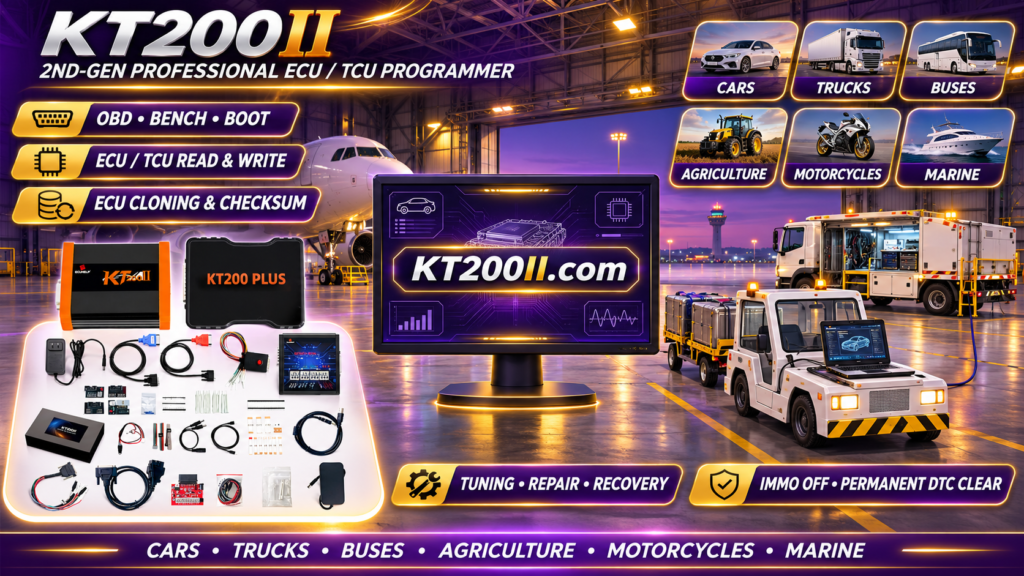
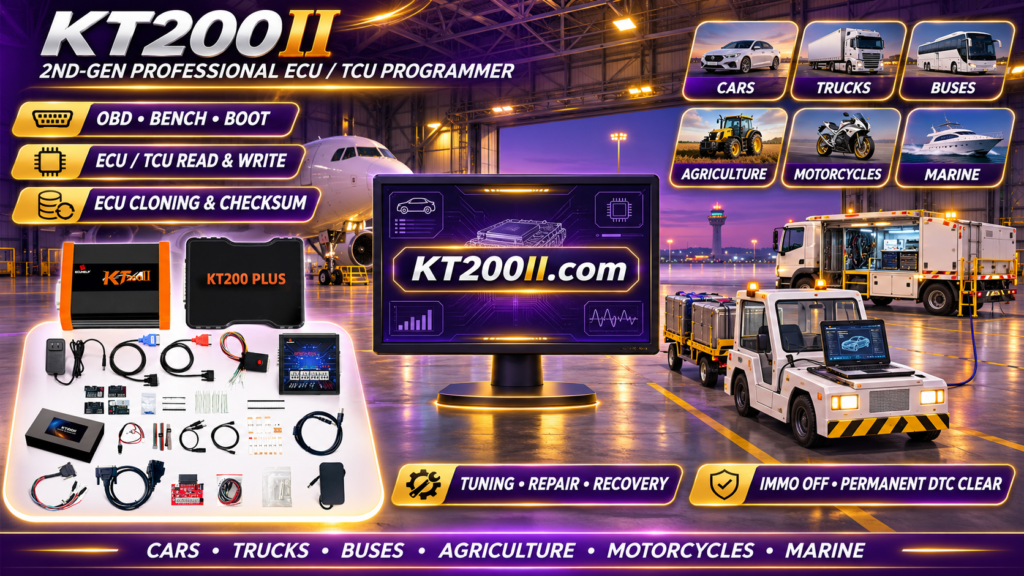
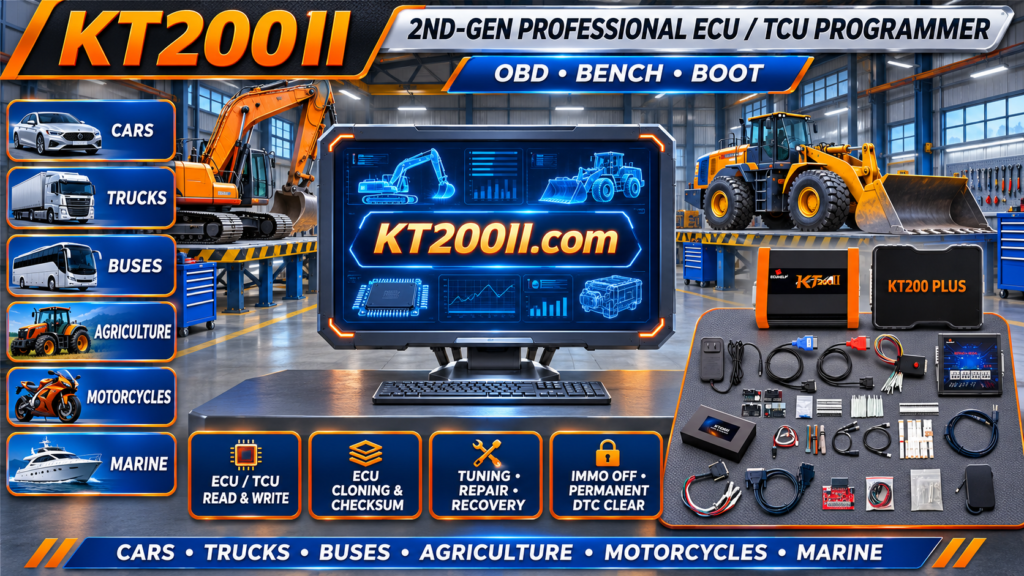
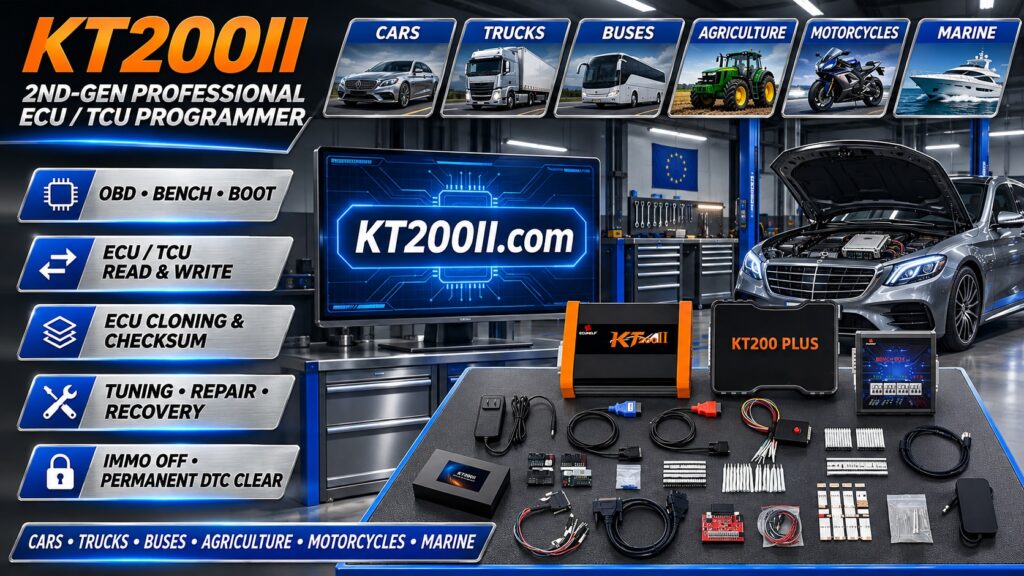
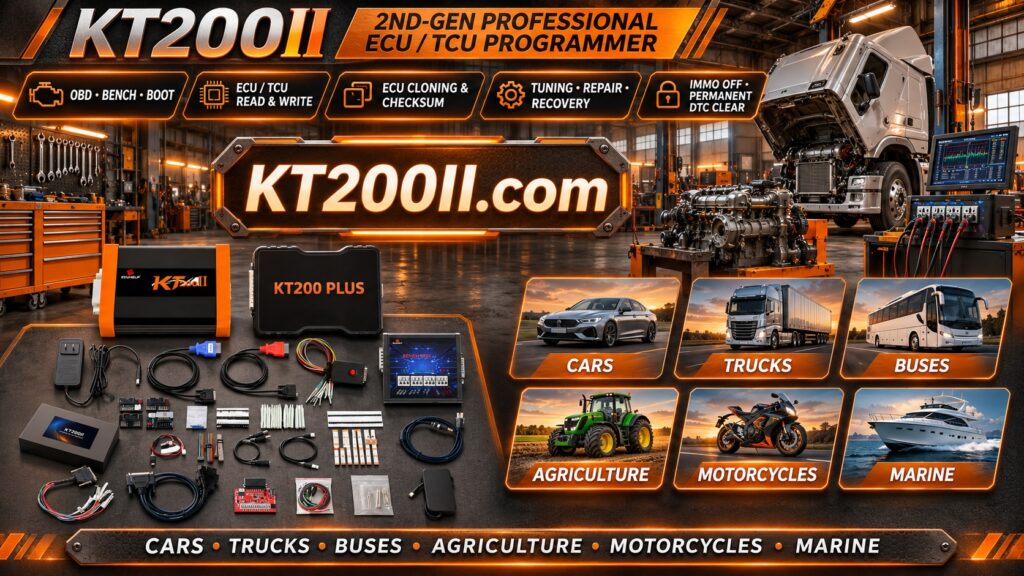
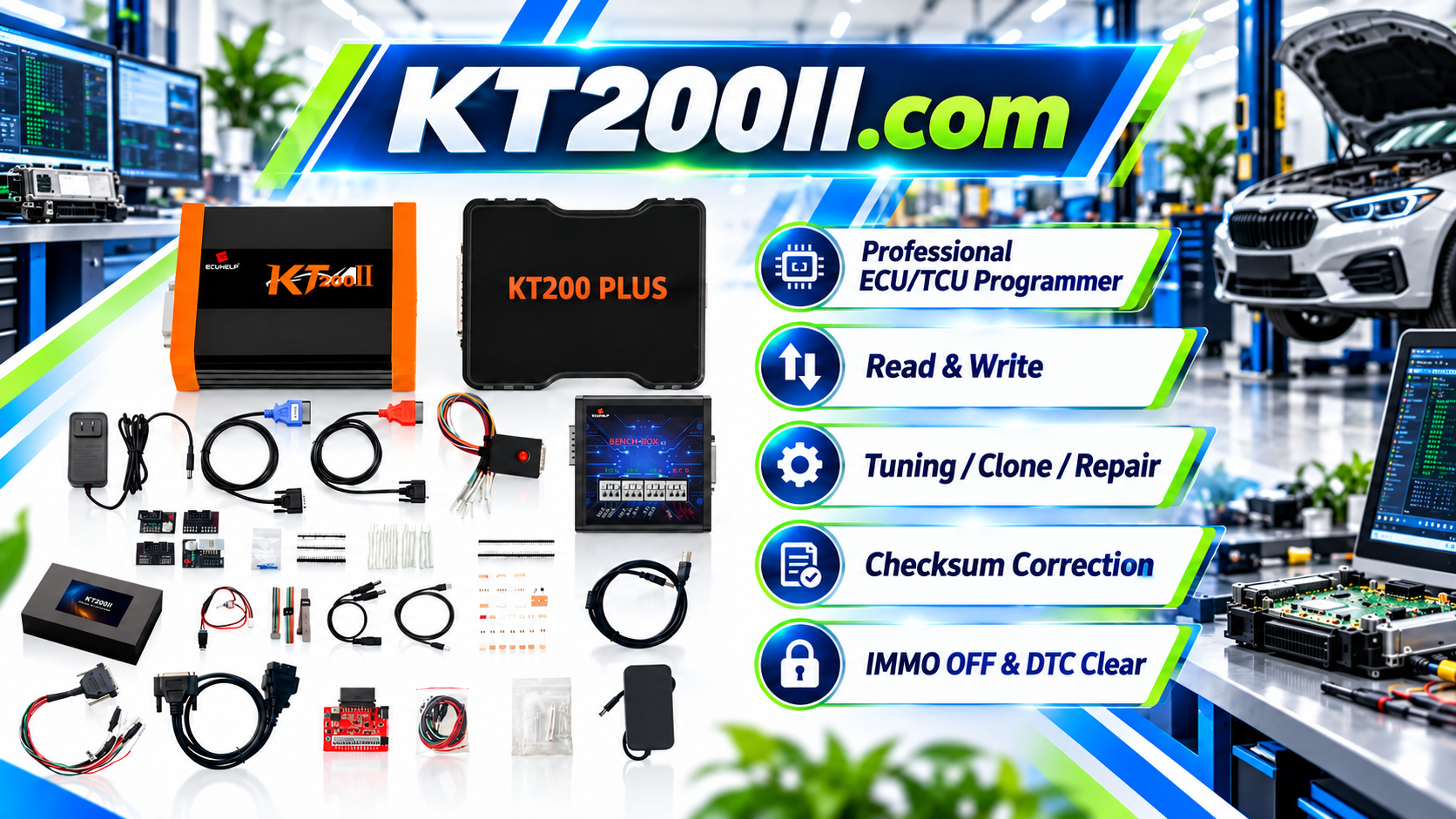
For workshops looking for a professional ECU programming solution, KT200II ECU Programmer provides multiple programming methods for supported ECU applications.
KT200II supports professional operations including:
- ECU reading
- ECU writing
- ECU backup
- ECU cloning
- Recovery operations
- TCU programming
Technicians can learn more about different connection methods through:
Check Compatibility Before ECU Programming
Before starting any ECU operation, technicians should verify vehicle and ECU compatibility.
The official KT200II Support List provides information about supported ECU applications and programming methods.
Download the Latest ECU Programming Software
Using updated software is important for maintaining stable ECU communication and expanding vehicle support.
The latest software resources are available through:
Conclusion
Choosing the right ECU programmer requires careful consideration of vehicle coverage, programming methods, backup functions and software support.
For professional automotive workshops, investing in reliable ECU programming equipment can expand repair capabilities and provide more advanced electronic services.
A suitable ECU programmer is not only a tool for writing data, but also an important solution for modern vehicle repair, ECU replacement and automotive electronics development.