
ECU Programming Service Quality Audit: A Practical Workshop Checklist
ECU programming quality depends on the complete workshop process, not only on whether the software reports a successful operation. Vehicle information, customer authorization, equipment preparation, technical records and final verification all contribute to a reliable service result.
A regular quality audit helps automotive electronics workshops identify weak points before they become repeated customer complaints. The audit does not need to interrupt daily work. A structured review of selected jobs can show whether technicians are following the same professional process.
Why ECU Programming Quality Audits Matter
When every technician follows a different workflow, the workshop may produce inconsistent records and uncertain handovers. One job may contain complete vehicle information, while another may only show a short note such as “programmed successfully.”
A quality audit creates a common standard. It helps the workshop review whether each job was prepared correctly, documented clearly and completed with the required checks.
Five Areas to Review
| Audit area | Review question | Evidence to check |
|---|---|---|
| Job intake | Was the vehicle and service objective recorded clearly? | Work order, customer request and vehicle information. |
| Technical preparation | Was the exact control unit and approved procedure confirmed? | Module details, support reference and technician notes. |
| Equipment control | Were the programmer, cables and accessories checked before use? | Checkout record and equipment condition notes. |
| Operation records | Were important steps and interruptions documented? | Software screenshots, status notes and job timeline. |
| Final verification | Were the required communication, diagnostic or functional checks completed? | Final report, technician checklist and customer handover note. |
Audit the Job Before Programming Begins
The first part of the audit should confirm that the job was ready before equipment was connected. Check whether the vehicle model, production information, control-unit references and customer objective were recorded.
Review whether the technician confirmed the official support information for the exact application. A general vehicle name should not be treated as proof that every operation is available.
Also check whether the customer approved the intended service. If the request was unclear, the correct process is to pause and clarify the objective before proceeding.
Review Equipment and Workstation Preparation
Inspect whether the technician used the correct equipment and whether the cables and accessories were in suitable condition. The audit should not focus only on the main programmer. Missing or damaged accessories can create delays and unnecessary troubleshooting.
- Was the correct programmer assigned to the work order?
- Were the required cables and adapters available?
- Were connectors and leads inspected before connection?
- Was the power arrangement suitable for the approved procedure?
- Was the computer ready for the required software workflow?
Check Whether the Procedure Was Documented
A quality audit should verify that the work order contains more than a final result. It should show which approved procedure was selected, which stage was completed and whether any unusual condition occurred.
If an operation was interrupted, the record should identify the stage reached and the conditions present at that time. This information is important for technical review and prevents another technician from repeating an action without understanding the previous status.
Review Final Verification
A successful software message does not automatically describe the complete vehicle condition. Check whether the technician completed the verification steps required for the service objective.
Depending on the application, the record may include communication confirmation, diagnostic review, warning-lamp inspection or a functional check. The technician should record only the checks that were actually performed.
Use a Simple Audit Score
A workshop can use a basic scoring system to identify trends. For each reviewed job, mark each area as:
- Complete: The required information or action was present.
- Needs improvement: The job was completed, but the record or process was incomplete.
- Missing: The required action or evidence was not available.
The purpose of the score is improvement, not punishment. If several jobs show the same weakness, update the workshop form or provide additional technician training.
Create a Monthly Quality Review
Select a small number of completed jobs each month. Include different vehicle types, technicians and service objectives when possible. Compare the results and record the most common issues.
| Finding | Possible improvement |
|---|---|
| Vehicle information often incomplete | Improve the intake form and require missing fields before preparation. |
| Equipment condition not recorded | Add a cable and accessory inspection section. |
| Final checks unclear | Create a standard post-service verification checklist. |
| Technicians use different wording | Define standard status terms for all work orders. |
Review Official KT200II Resources
For official product information, visit the KT200II product introduction page. The KT200II Operation Modes page helps workshops organize training and audit references for different workflow categories.
Before approving a job, review the official KT200II support list. Software resources are available through the KT200II software page, and additional technical articles can be found on the KT200II official blog.
For the main product and support navigation, visit the KT200II official website.
Official KT200II Store and Support
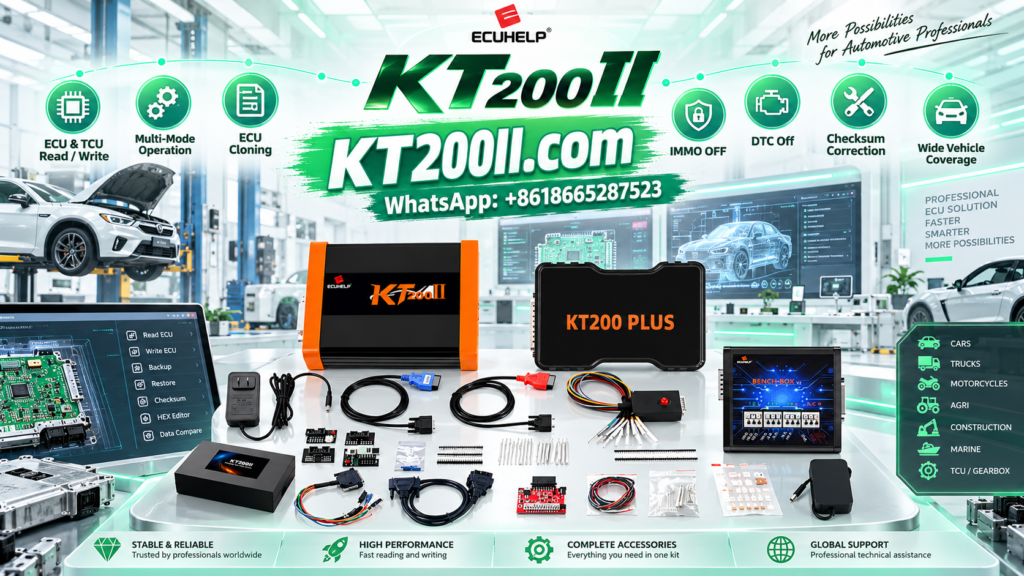
KT200II.COM is the official website for the KT200II ECU programmer. ECUHELP’s official global store is HELPECU.COM. To view the official product listing and ordering options, visit the KT200II ECU programmer order page.
For product questions and purchasing assistance, contact the official KT200II team on WhatsApp at +86 186 6528 7523.
Frequently Asked Questions
How often should a workshop perform a quality audit?
A monthly review of selected jobs is a practical starting point. Workshops with higher job volume may review records more frequently.
Should every audit focus on technical errors?
No. Documentation, customer approval, equipment control and final communication are also important parts of service quality.
What if a technician’s job was technically successful but poorly documented?
Mark the record as needing improvement. A successful operation should still be supported by clear records for future service and customer communication.
Can an audit replace technician training?
No. Audits identify gaps, while training provides the knowledge and supervised practice needed to correct them.
Conclusion
An ECU programming service quality audit gives automotive workshops a practical way to review the complete customer journey, from job intake to final verification. By checking documentation, technical preparation, equipment control and post-service records, workshops can reduce repeated mistakes and improve consistency.
Regular, fact-based reviews help technicians follow the same professional standards and give customers a clearer, more reliable ECU programming service.