How to Choose the Right ECU Programming Tool for a Professional Workshop
Modern vehicles rely heavily on electronic control units (ECUs) to manage engine systems, transmissions and many other vehicle functions. As automotive electronics continue to develop, professional workshops increasingly require reliable ECU programming equipment.
Choosing the right ECU programming tool is an important decision. The best solution is not always the tool with the most features, but the one that matches the workshop's actual repair needs, supported vehicles and technical workflow.
Why Workshops Need a Professional ECU Programming Tool
Traditional diagnostic equipment is mainly designed for fault diagnosis, live data monitoring and service functions. However, many advanced repair situations require direct access to ECU data.
Professional ECU programming tools allow technicians to perform operations such as:
- ECU reading
- ECU writing
- ECU backup
- ECU cloning
- ECU recovery
- Replacement ECU programming
- TCU programming
ECU programming is the process of transferring or modifying software data inside a vehicle control unit, making reliable programming equipment an important part of modern automotive electronic services. :chatgpt-content-reference{index="0"}
Factor 1: Check ECU and Vehicle Coverage
The first factor when selecting an ECU programming tool is supported vehicle coverage.
Different manufacturers use different ECU suppliers, processors and communication systems. A professional tool should provide clear support information before technicians begin any operation.
Important coverage information includes:
- Vehicle brands
- Vehicle models
- ECU manufacturers
- Hardware versions
- Supported programming methods
Before purchasing equipment, technicians should always confirm whether the tool supports the ECU types they commonly repair.
Factor 2: Supported Programming Methods
Different ECUs require different communication methods depending on their internal design.
A professional ECU programmer should support multiple programming modes when available.
OBD Programming
OBD programming uses the vehicle diagnostic connector to communicate with supported ECUs.
Advantages:
- No ECU removal required
- Fast connection process
- Suitable for supported vehicles
Bench Programming
Bench programming connects directly to the ECU outside the vehicle.
It is commonly used for:
- ECU backup
- ECU cloning
- Replacement ECU preparation
- Direct ECU communication
Boot Programming
Boot mode provides deeper access to selected ECU processors and memory areas.
It is often used for advanced ECU repair and recovery procedures.
BDM and JTAG Programming
Some ECU families require processor-level access methods such as BDM or JTAG.
These methods are commonly used by professional automotive electronics specialists.
Factor 3: ECU Backup Capability
A reliable ECU programming tool should provide safe backup functions.
Before any writing operation, technicians should save original ECU data.
Original backup files help:
- Restore factory ECU information
- Recover from programming failures
- Support ECU cloning
- Protect customer vehicle data
A professional workflow should always start with reading and saving original ECU information.
Factor 4: Software Support and Updates
Hardware is only one part of an ECU programming solution. Software support determines how many vehicles and ECU generations can be handled.
A good ECU programming platform should provide:
- Regular software updates
- Expanded vehicle coverage
- Updated communication procedures
- Technical information
Modern vehicles contain increasingly complex electronic systems, and ECU software support continues to be an important factor for professional repair operations. :chatgpt-content-reference{index="1"}
Factor 5: Ease of Use and Technical Information
Professional ECU work requires accurate procedures. Clear technical information can help technicians avoid connection mistakes and improve efficiency.
Useful resources include:
- Wiring diagrams
- Connection instructions
- Vehicle support lists
- Programming guides
Factor 6: Stable Hardware and Communication
ECU programming requires stable communication between the computer, programming device and vehicle control unit.
Important hardware features include:
- Reliable communication interface
- Stable power management
- Quality cables and adapters
- Professional software compatibility
Common Mistakes When Choosing an ECU Programmer
Choosing Only Based on Price
The cheapest tool may not provide the required vehicle coverage or programming functions.
Ignoring Future Expansion
Workshops should consider future service plans when selecting equipment.
Not Checking Support Information
Always verify ECU support before purchasing or starting a repair procedure.
Ignoring Software Updates
Without software development and updates, equipment may become limited as new vehicles appear.
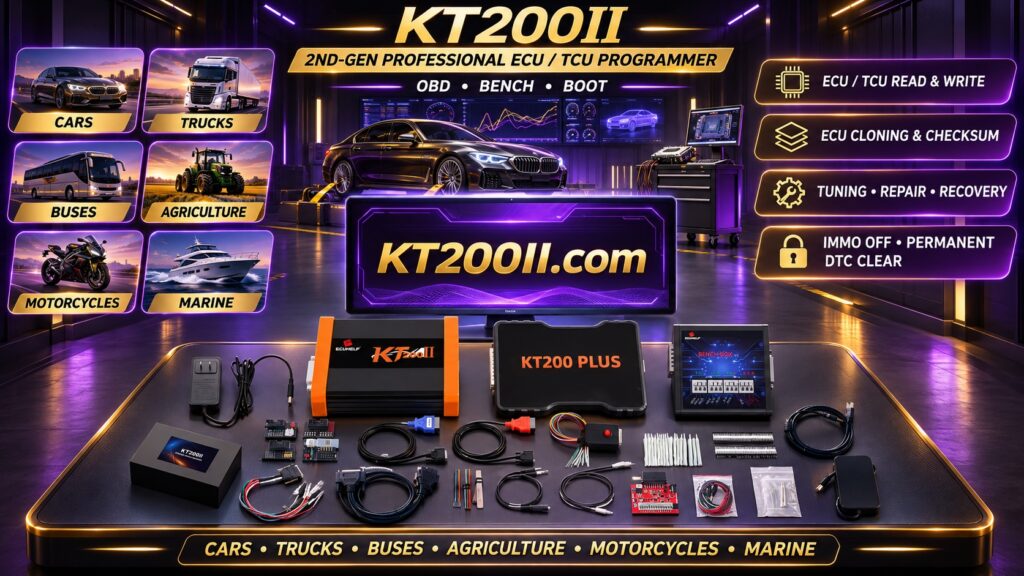
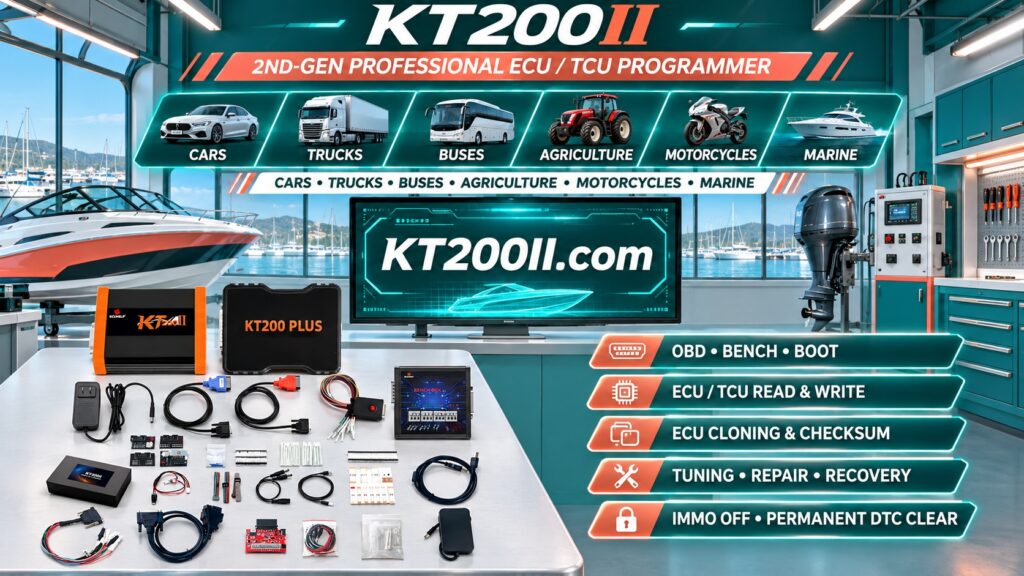
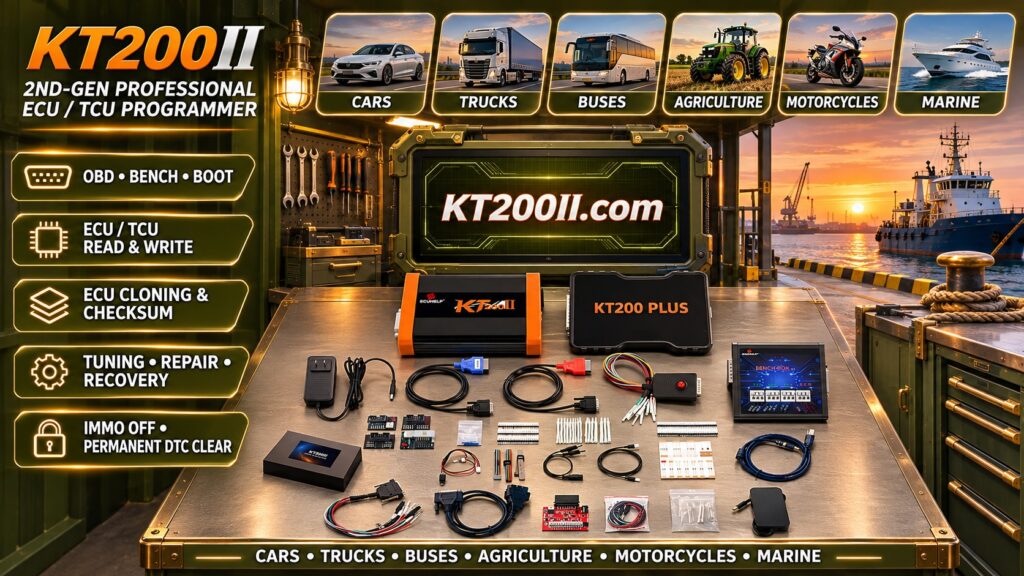
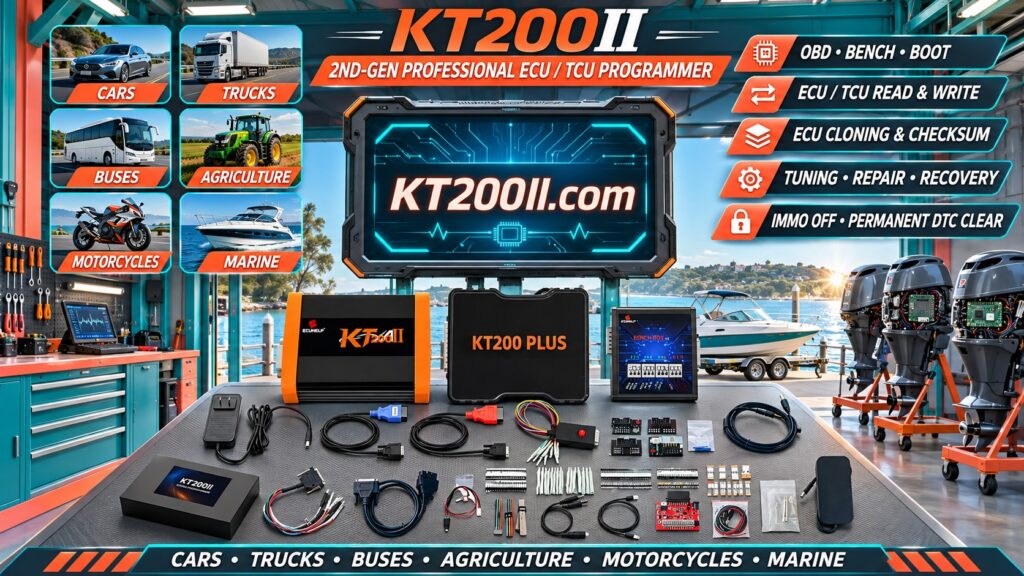
KT200II ECU Programmer for Professional Workshops
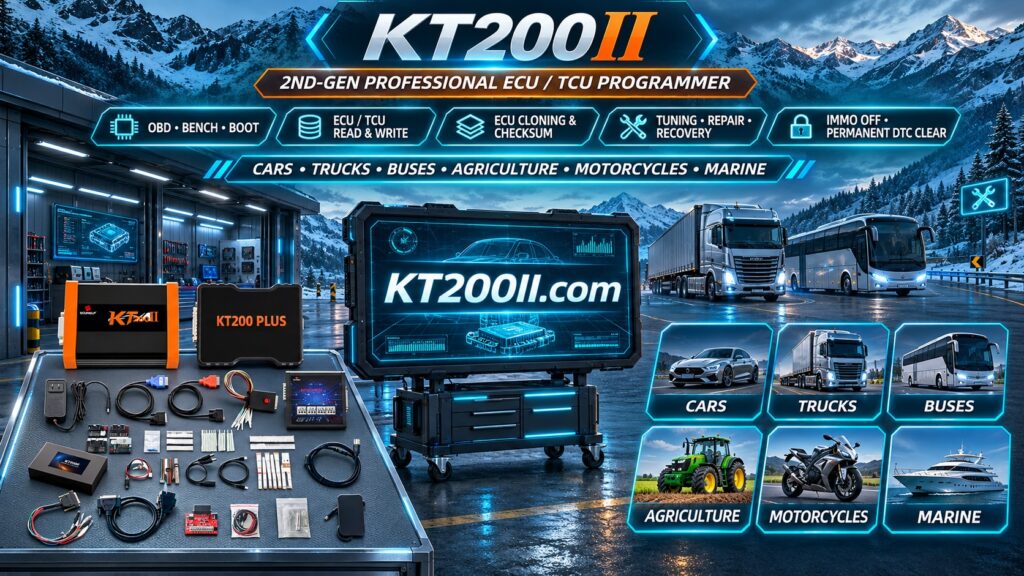
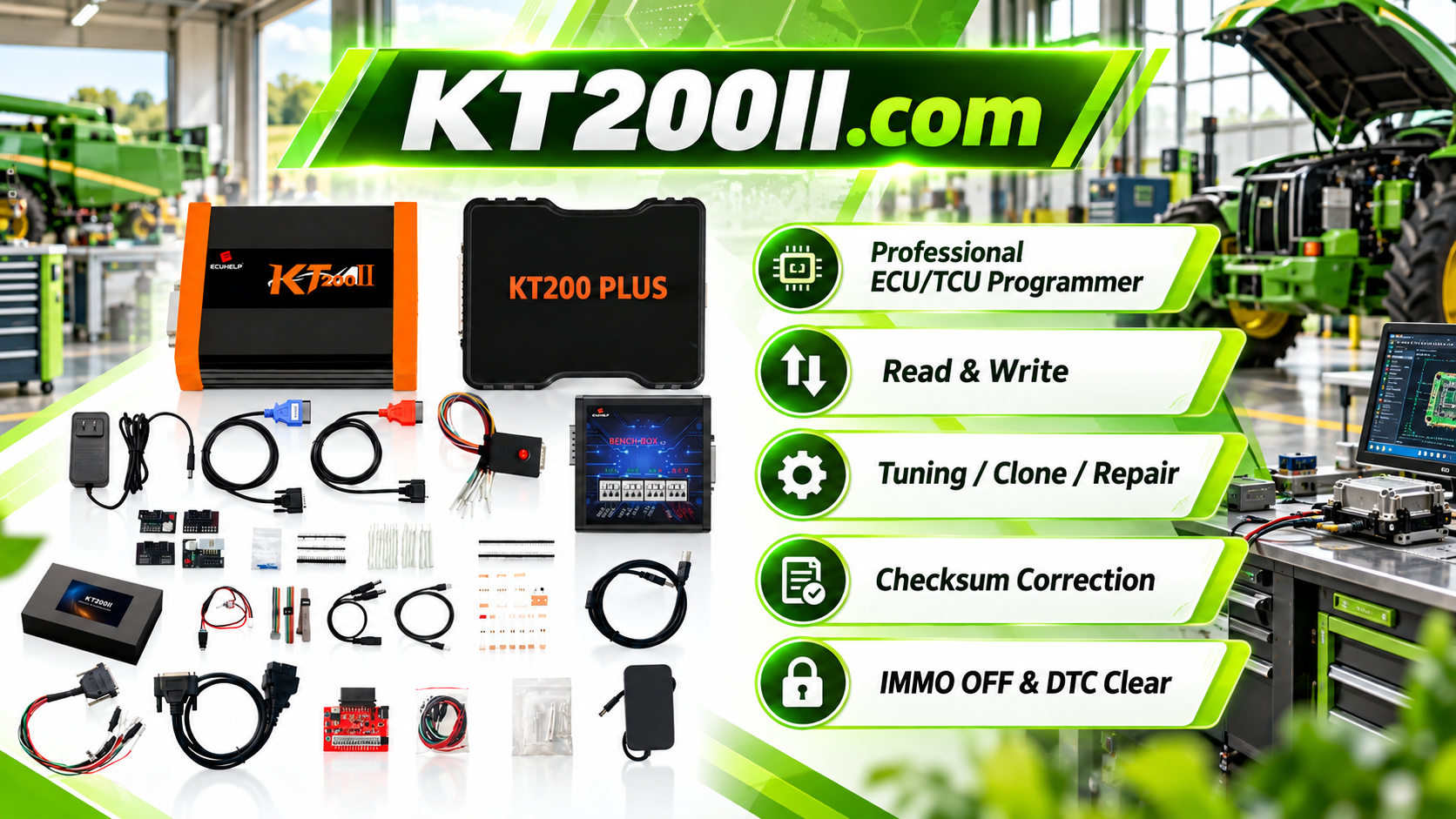
For workshops performing ECU and TCU programming services, the KT200II ECU Programmer provides professional ECU programming functions on supported applications.
KT200II supports operations including:
- ECU reading
- ECU writing
- ECU backup
- ECU cloning
- Recovery operations
- TCU programming
Technicians can learn more about available programming methods through:
Check ECU Compatibility Before Programming
Before performing ECU operations, technicians should confirm:
- Vehicle information
- ECU model
- Hardware number
- Software version
- Programming method
The official KT200II Support List provides compatibility information for supported applications.
Keep ECU Programming Software Updated
Updated software helps technicians work with newer ECU generations and maintain reliable communication.
The latest resources are available through:
Conclusion
Choosing the right ECU programming tool requires considering vehicle coverage, programming methods, backup capability, software support and workshop requirements.
A professional ECU programmer is not only a device for reading and writing data, but also an important solution for modern automotive electronic repair.
By selecting suitable equipment and following a professional workflow, workshops can expand their ECU repair capabilities and provide more advanced services to customers.